 Above: Blonde Bait, by Ed Lacy (Zenith, 1959), with a cover illustration by Rudy Nappi. Below, right: The Blonde Died Dancing, by “Kelley Roos,” aka William and Audrey Kelley Roos (Dell, 1958), with cover art by Victor Kalin.
Personally, I’ve never thought that blondes were even remotely stupid. This, despite all those chauvinistic
dumb blonde jokes that people (including my own father, sad to say) bruit about. True, I have known a few blondes—women as well as men—who could have used a bit more on the ball, but it had nothing necessarily to do with the color of their tresses. I’ve also met brunettes and
redheads lacking in general and situational wisdom. And of course, I have seen men of all hair hues
go stupid in the presence of blonde women, an inclination that time and sexual equality may be unable to cure.
If it’s not based on scientific studies, then what’s the source of the persistent bias against blonde women?
Wikipedia suggests, “The roots of this notion may be traced to Europe, with the ‘dumb blonde’ in question being a French courtesan named
Rosalie Duthe, satirized in a 1775 play
Les curiosites de la Foire.” A Web site called The Answer Bag
offers more perspective on the prejudice against fair-headed femmes. “Blonde hair is a recessive trait, and therefore somewhat rarer than brown or black hair. That has traditionally made it desirable. ...,” the site explains. It continues:
Whenever someone has the good fortune to be favored by society purely because of how they were born, those not so favored are likely to resent them. Especially over time. By the mid-nineteenth century, blondes were considered seductive, conniving, sinful, and evil. Short stories and novels—and especially the three-volume wonders so enjoyed by young women of the time—often pitted a virtuous young brunette against a wicked, deceitful blonde. (The opposite of what we often see on television today!) This stereotype held for a few years, until bleaching came into vogue.
Suddenly, brunettes had the world of blondness opened to them, and, like magic, the evil blonde image vanished. Blondes were considered cute and innocent. (Remember all those pixie-like platinum blonde silent-movie stars?) In those early days of hair dying, bleaching your hair blonde was much trickier than it is today. Ingredients were often expensive, and they are pretty volatile. Add too much peroxide, for example, and you risk burning your scalp (or ending up bald). Usually, the very-fair, bottle blondes, 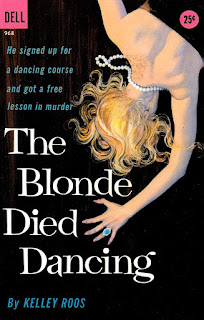 then, were the women who could afford it. Being a bottle-blonde marked you as, well, if not exactly wealthy, at least well-off enough that you could buy such luxuries. Blondeness became associated with wealth and social status.
By the mid-twentieth century, dyeing your hair was much cheaper, but the image of blondes as rare and desirable still held sway. Blondes (including bottle-blondes) were often seen as social climbers, cashing in on their wholesome attractiveness to join the socialite sect and raise their status. The party circuit became populated with fair-haired beauties. (Blondes have more fun, after all!) These party-girls often made their money and their reputations as trophy wives or by upgrading lovers. Rumors abounded, and blondes became seen as women who sleep their way to the top. The implication, then is that not only are blondes “loose,” but their good looks are all they have available to them. They can’t work their way to the top by virtue of their minds (and therefore, their minds aren’t all that great). The fact that so many of the wealthy, happy-go-lucky upper-crust were blondes only added to the virulence of such stereotypes by adding an element of jealousy.
You can see the full range of public opinions regarding blonde women reflected in novel covers produced over the last half century. There are blonde
vixens, blonde victims, blondes who spell delight, blondes who spell disaster, and blondes who simply cannot seem to keep a decent stitch of clothing wrapped around their silky curves.
The paperback front heading this post, from
Blonde Bait, a 1959 crime novel by
Ed Lacy (a pseudonym used by Leonard “Len” S. Zinberg), represents the cliché of lovely yellow-topped lasses as connivers fully prepared to exploit their looks to get their way. As the teaser line on that jacket puts it, “She had to buy protection—and her payment was her body.” I have not read
Blonde Bait, but I’m told it doesn’t exactly mark the high point of the
prolific Lacy’s literary career. (Film and crime-fiction enthusiast Michael E. Grost
describes Blonde Bait as “a thriller lacking both a puzzle plot and plausibility. It gets a little more interesting towards its finale, when Lacy drags in a background of events from the
Algerian War, but it never really amounts to much.”) It does, though, boast one hell of a cover. The artwork is credited to 20th-century American painter and illustrator
Rudy Nappi, who worked for men’s magazines as well as paperback publishers. And though it suggests that Nappi might have earned a good living creating some of the pulp-fiction industry’s more salacious imagery, he is in fact best recalled for painting iconic Nancy Drew and Hardy Boys book covers.
Assembling a gallery of book jackets to show how blondes have been popularly portrayed since World War II demanded some ruthless editing. I could’ve expanded this inventory greatly by using crime novels that merely feature flaxen-haired lovelies on their façades, but decided to limit myself to books that actually include the word “blonde” in their titles. And even that threatened to grow this post beyond reason! Among the books shown below are familiar older works, such as
Erle Stanley Gardner’s
The Case of the Black-Eyed Blonde (1944) and
Jack Webb’s
The Bad Blonde (1956), as well as more recent crowd-pleasers, including Michael Connelly’s
The Concrete Blonde (1994) and a personal favorite among
Loren D. Estleman’s Amos Walker yarns,
Poison Blonde (2003).
Devious some of these blondes may be, but dumb they’re not.


 READ MORE:
 “
Bodies, Bombshells, and Berlin,” by J. Kingston
Pierce (Killer Covers); “
The Case of the Platinum Blonde (1944), by Christopher Bush,” by Kate Jackson (Cross-Examining Crime).


 Killer Covers is a companion project of The Rap Sheet, a news and features resource for crime-fiction fans, edited by J. Kingston Pierce.





